

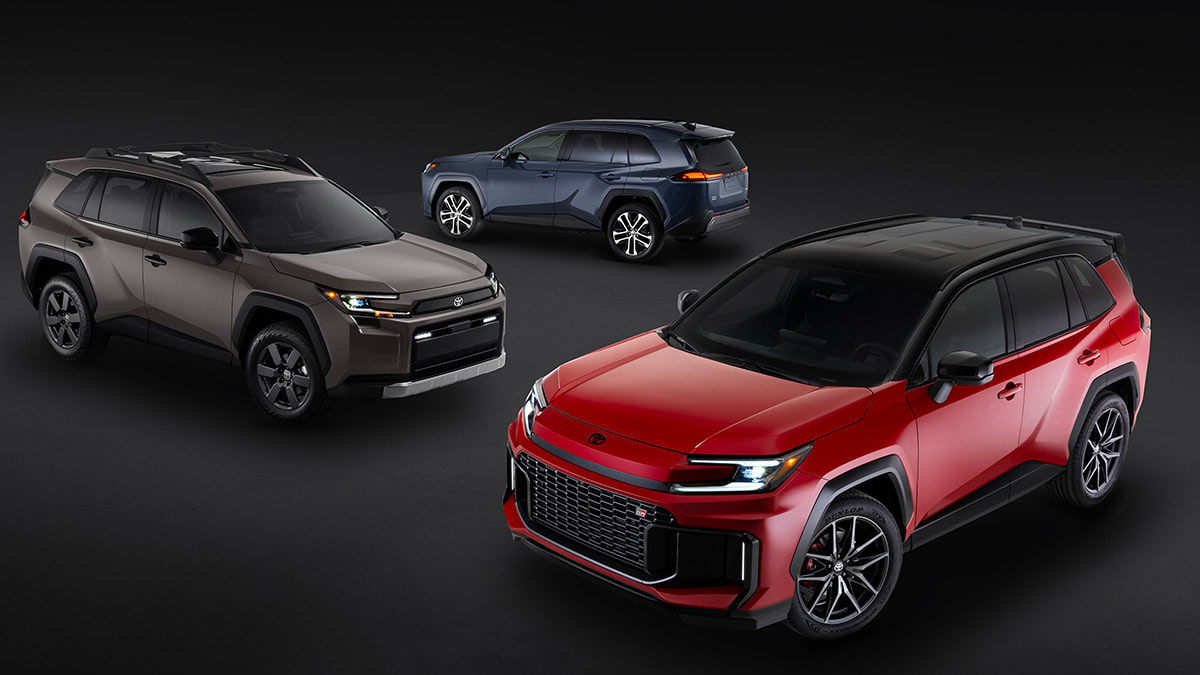
Let’s face it – the debate between AWD and FWD for your RAV4 isn’t sexy, but it’s important. The right choice could save you thousands and keep you from getting stuck in that snowbank outside your in-laws’ house this winter.
Choosing between front-wheel drive and all-wheel drive isn’t just about being “outdoorsy” – it’s about matching your drivetrain to your actual lifestyle (not the one you post about on Instagram).
The differences? AWD gives you better traction in snow, rain, and off-road, while FWD saves you $1,400-$1,650 upfront, delivers 1-2 MPG better fuel economy, and costs less to maintain. The right choice depends on where you live, how you drive, and what matters most to your wallet.
So let’s cut through the marketing hype and figure out which one actually makes sense for you. Spoiler: most people don’t need AWD as badly as they think they do.

FWD vs AWD: What’s Actually Different in the RAV4?
The RAV4 comes with FWD standard on most trims, with AWD available as an option (except on TRD Off-Road and Adventure trims, which get AWD standard). But what’s actually happening under your car?
FWD sends power only to the front wheels, which handle both steering and moving the car forward. It’s simpler, lighter, and more efficient on dry roads.
AWD in the RAV4 isn’t always powering all four wheels. It’s primarily front-wheel drive until you need extra traction. Then, the system automatically sends power to the rear wheels too. Smart, right?
In the newest RAV4s (2025-2026), the numbers tell an interesting story:
- FWD hybrid: 226 horsepower
- AWD hybrid: 236 horsepower (a little boost!)
- Plug-in hybrid: 320 horsepower (only comes in AWD)
The TRD Off-Road and Adventure trims aren’t just for show – they include special drive modes like Mud & Sand or Rock & Dirt that actually adjust how power gets distributed. But let’s be honest – most RAV4s will never see anything rougher than a gravel driveway.
When AWD Actually Makes Sense (And When It’s Overkill)
The Real Advantages of AWD
Better Traction: AWD powers all wheels, giving you noticeably better acceleration on slippery surfaces. When one wheel starts to slip, power shifts to wheels with grip. This is especially helpful in snow, ice, and rain.
More Stable Handling: With power going to all wheels, you get improved steering response and cornering grip. It’s like having an extra hand steadying your shopping cart with the wobbly wheel.
Faster Acceleration: AWD RAV4s typically hit 60 mph quicker than their FWD siblings. It’s physics – four wheels putting power down beats two.
Double the Towing Capacity: FWD RAV4s tow up to 1,750 pounds, but AWD models can handle 3,500 pounds. That’s the difference between a small teardrop camper and something you can actually stand up in.
Real-world testing proves AWD’s worth in deep snow or loose surfaces. If you live where winter means more than just a cute scarf, AWD adds real safety value. A 2019 study by the AAA Foundation found that vehicles with AWD stopped 15% shorter on snowy roads compared to FWD models.
Why FWD Still Makes Sense For Most People
Better Fuel Economy: FWD gets 1-2 MPG better mileage (about 35 MPG highway for gas models vs. 33-34 for AWD). That adds up over years of ownership.
Cheaper Up Front: You’ll save $1,400-$1,650 by skipping AWD. That’s a decent vacation or a lot of coffee.
Simpler Maintenance: Fewer moving parts mean lower repair costs over time. No rear differential fluids to change, no coupling issues to fix. According to Consumer Reports reliability data, FWD models tend to have fewer drivetrain-related problems.
Perfect for Everyday Life: For city driving, highways, and light rain, FWD with modern traction control is more than adequate. Most days, you won’t notice any difference.
Here’s how they stack up:
| Feature | FWD RAV4 | AWD RAV4 |
|---|---|---|
| Traction (Wet/Snow) | Good with proper tires | Excellent; actively sends power where needed |
| Fuel Economy (Highway) | 35 MPG (gas); better in hybrids | 33-34 MPG; 1-2 MPG penalty |
| Price Premium | Base price | +$1,400-$1,650 |
| Towing Capacity | 1,750 lbs | 3,500 lbs |
| Maintenance Costs | Lower; simpler drivetrain | Higher; more fluids, components |
| Best For | City driving, mild climates | Snow, light off-road, towing |
The True Cost of AWD (It’s Not Just the Sticker Price)

AWD isn’t just a one-time expense. Let’s talk about the real costs:
Upfront Premium: That $1,400-$1,650 upcharge could have been a down payment on a nice vacation. Or a lot of tacos.
Ongoing Fuel Costs: The 1-2 MPG difference means about $130 extra in gas annually (at $3.50/gallon for 12,000 miles). Not huge, but it compounds over years.
Maintenance Hits: AWD systems need rear differential fluid changes every 30,000-60,000 miles. Skip these, and you’ll hear grinding noises or see warning lights. Toyota’s maintenance schedule confirms these additional service requirements.
The good news? Toyota’s reliability mitigates many concerns. Recent RAV4s (2019+) score 86/100 from Consumer Reports, regardless of drivetrain. The hybrid battery is warranted for 150,000+ miles, so that’s one less worry.
Hybrids narrow the fuel economy gap between drivetrains, making AWD less of a penalty if you’re already going hybrid. According to EPA testing, the RAV4 Hybrid AWD gets only about 1 MPG less than the FWD version.
RAV4 Reliability: FWD vs AWD

Both drivetrains are solid choices for longevity. With proper maintenance, RAV4s regularly reach 200,000+ miles.
Post-2019 models fixed many earlier issues like transmission hesitations and valve problems. Hybrids have proven especially reliable, with fewer moving parts in the transmission to break.
AWD-specific complaints are rare – mostly occasional coupling noises that a dealer can address. Northern owners consistently report durable performance in snow, suggesting the AWD system holds up well to stress.
Consumer Reports ranks 2025-2026 RAV4s at 86/100 for predicted reliability, with Toyota topping brand reliability charts year after year.
The Bottom Line: Which RAV4 Drivetrain Is Right For You?

Choose FWD if:
- You live in a mild climate without much snow
- Most of your driving is highways and city streets
- You’re budget-conscious and prioritize fuel savings
- You don’t tow anything heavy
Choose AWD if:
- You regularly drive in snow, heavy rain, or hilly terrain
- You occasionally hit gravel roads or light trails
- You tow a camper or boat
- The peace of mind is worth the extra cost
My advice? Test drive both versions on the same day if possible. Feel how AWD grips on a wet road or when taking a corner. For hybrids, the AWD’s power boost might feel worth it even without snow in your forecast.
Remember – even the best AWD won’t help you stop faster on ice. Good tires matter more than drivetrain for braking. If you live in the snow belt, winter tires on FWD will outperform all-seasons on AWD every time, according to tests by TireRack research.
Ultimately, the choice comes down to your actual driving needs, not what looks coolest in commercials. FWD is perfectly capable for most drivers, while AWD offers extra capability for those who truly need it.
And remember – either way, you’re still getting Toyota’s legendary reliability. Just don’t forget to change your oil.

